Successful Completion of Milestone 5

On March 18, 2026, the fifth project milestone was successfully completed at the consortium partner Urban Software Institute in Darmstadt. We would like to express our sincere thanks for the excellent organization and the warm hospitality on site. With the achievement of this milestone, the project is now on the home stretch towards completion at the end of August 2026. Milestone 5 represented an important step in bringing together key results and specifically aligning the further course of the project. We were particularly pleased about the participation of our project officer, Ms. Schmitz, who joined online for a one-hour presentation. This was followed by an exchange with consistently positive feedback and a lively Q&A session.
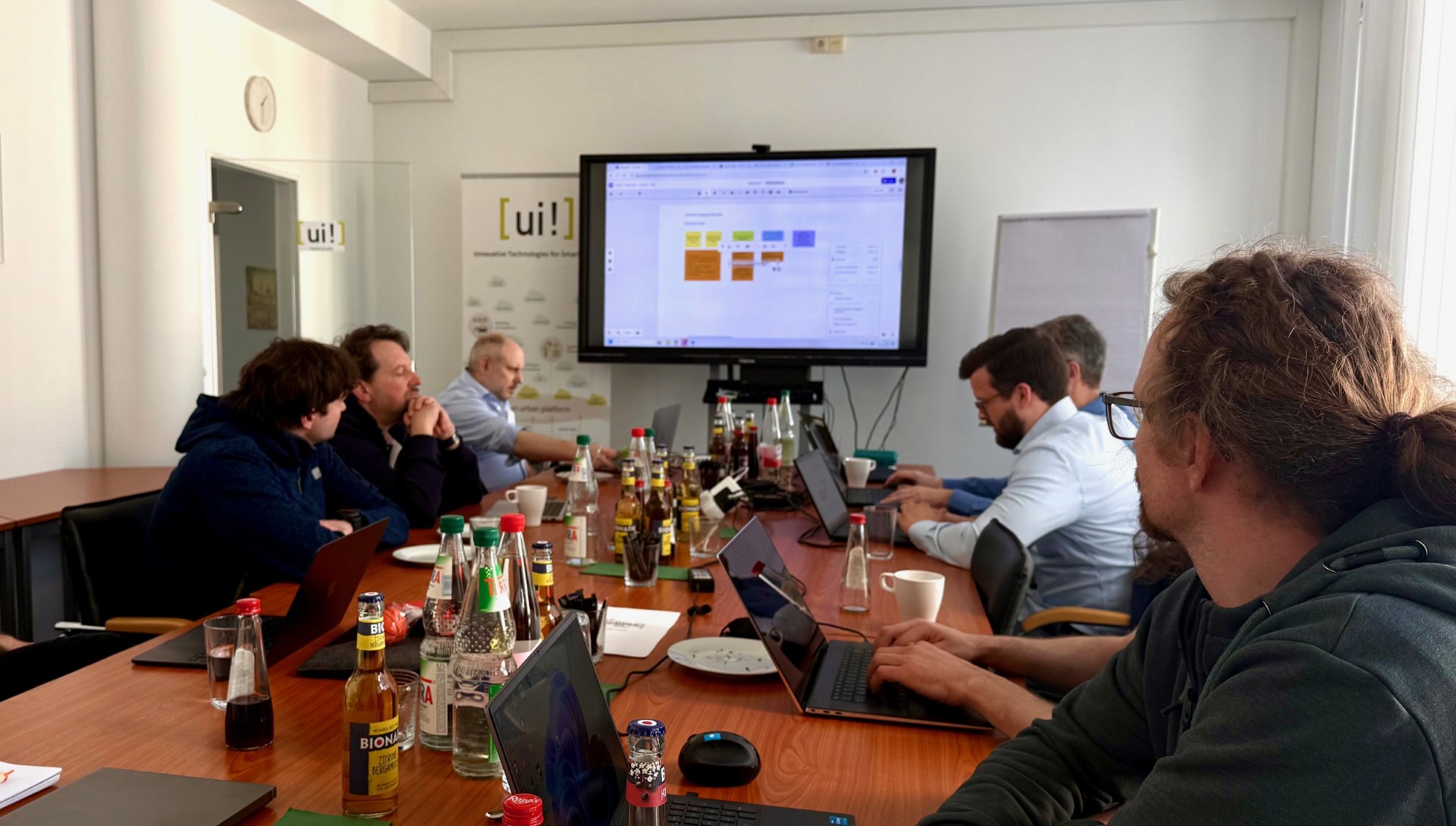
The following topics were presented during the meeting:
- The base platform and the demonstration of the “15-Minute City” showed how the underlying knowledge graph platform flexibly and uniformly describes resources in the real world. The demonstration illustrated which Point-of-Interest (POI) types are reachable within certain time windows and how accessibility and supply quality in urban spaces can be analyzed in a data-driven manner.
- The integration of mobility data from the University of Duisburg-Essen and LocosLab GmbH was further developed and forms the basis for the multimodal mobility index as well as the MobyDex platform. New data was integrated, calculations were expanded, and improvements were presented in a short demonstration.
- The mobility needs analyses of the Urban Software Institute are available as a functional prototype, address central analysis and decision-making questions, and are illustrated using concrete user journeys. The results are currently being consolidated and prepared together for the final presentation.
- YellowMap presented a consulting and planning use case with a focus on the Ruhr region and the University of Duisburg-Essen, based on a practical scenario with mocked student data.
- CISS presented a cycle path tool for potential analysis that compares travel times of cycling and public transport and takes existing cycling infrastructure into account. In the future, the demand for cycle paths is to be more strongly integrated; supplementary calculations for Karlsruhe can be provided.
- CAS reported that the research project has been presented by the consortium at various events, including the Regional Conference in Karlsruhe, the Smart Country Convention in Berlin, and the Smart City Expo in Barcelona, as well as through specialist contributions at workshops and exchange formats. Accompanying this, marketing and public relations measures – including the website, image video, flyers, and LinkedIn posts – were implemented to make the project results visible and disseminate them further.
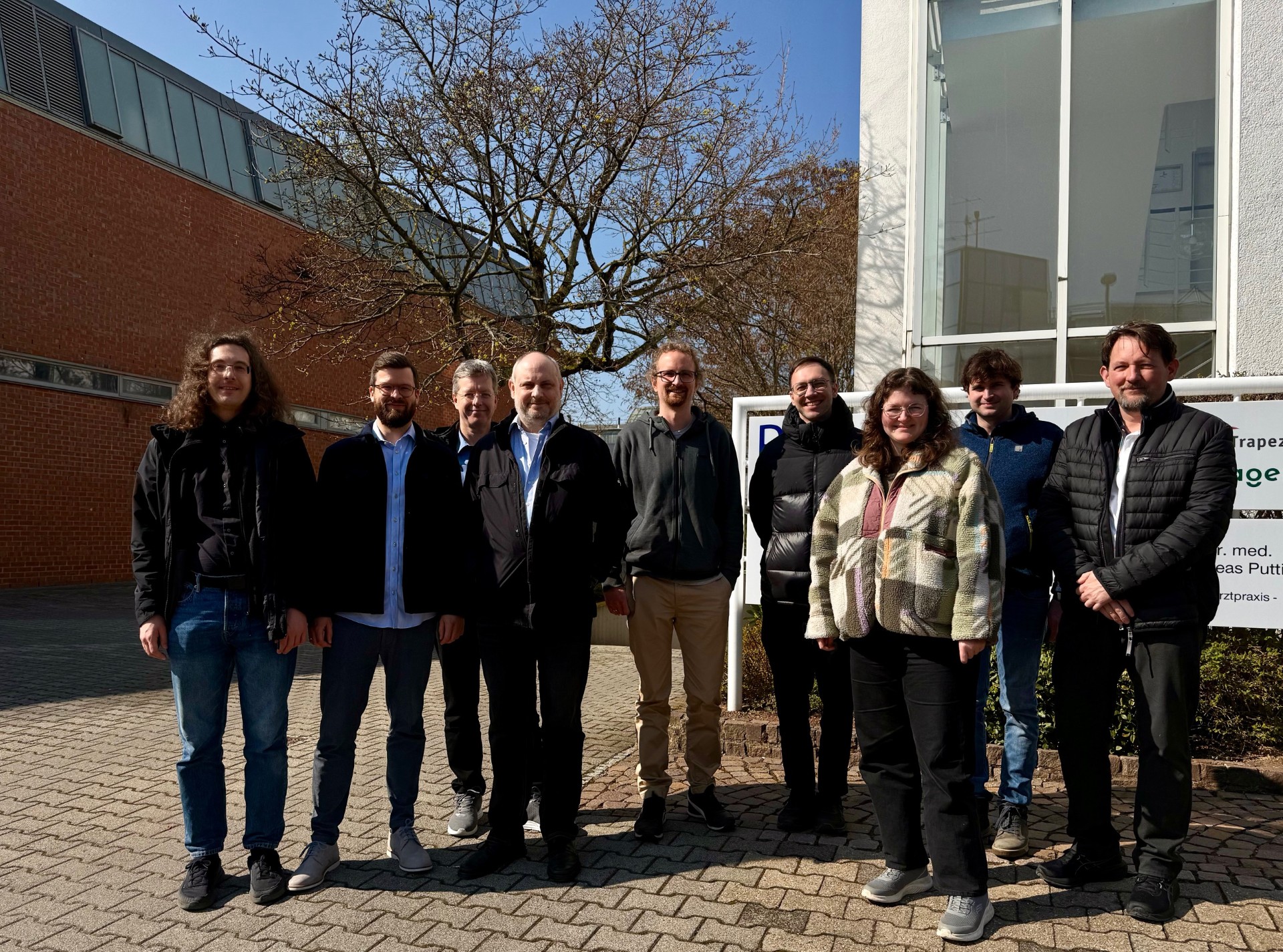
In addition, the exploitation potential of the project results, the integration of data, and the next steps regarding surveys were discussed. The meeting took place in a constructive and pleasant working atmosphere, and the collaboration among the partners supports the successful continuation of the project.